Live life with no excuses, travel with no regret
Oscar Wilde

My list of must-sees had been compiled and a multitude of Gaudi constructions, museums, galleries and churches were now circled in the guidebook I’d pored through in preparation for my cultural weekend in Barcelona. As I skipped up to the airport check-in desk my excitement was quieted by an unanticipated “I’m sorry, I’m afraid your flight is going to be delayed by at least four hours”. Great! The first evening of my holiday was going to be wasted in an airport! Finally I arrived in Barcelona and met my sister who had been waiting patiently for me. It was far too late to find anywhere decent to eat (even by Spanish standards) but we were ravenous and anything would do. We wandered the residential area near our hotel and were overjoyed to finally discover a tiny sports bar with a decently sized menu. The food was basic, but good, my choice being the traditional pa amb tomaquet (crusty bread rubbed with fresh tomatoes and garlic, topped with cured ham and patatas bravas on the side). It definitely filled what had become a very large hole. Despite the fact that it was now the early hours of the morning the waitress was incredibly friendly and helpful and we were treated like locals, even though we must have stood out like sore thumbs.
Full and exhausted, we said goodbye to our friendly waitress and dragged ourselves back to our hotel where we met our even friendlier receptionist – Claudio. We were desperate to get to bed but he was determined to introduce us to the ins and outs of his city, and we couldn’t refuse his enthusiasm. Using a map of Barcelona on his computer he described all the city’s key areas, speaking a unique brand of Spanglish that was curiously inconsistent. He didn’t know the English for ‘meat’ or ‘square’ but was quite comfortable using the word ‘sketchy’ to describe the dubious characters to be found West of La Rambla at night. I couldn’t help but wonder where he’d picked up some of his specialist vocabulary…
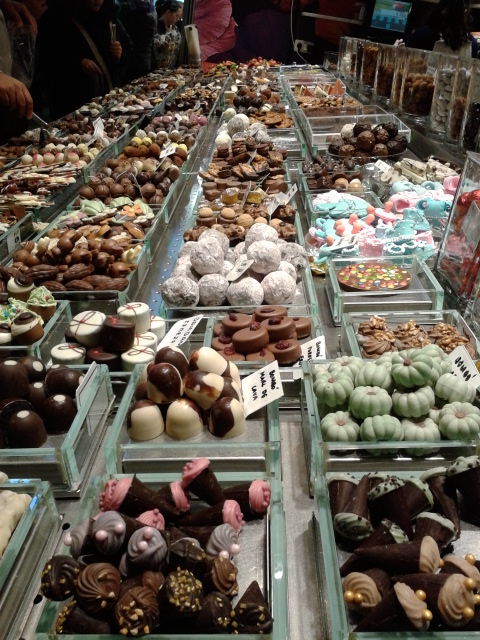
Having managed to grab a few hours sleep we started the next day at the top of La Rambla. Our goal was to make our way down it and around the old town, stopping off at all the usual tourist sites. La Rambla is a chaotic mélange of market traders, tourists and locals out for a stroll, noisy pet stalls selling all manner of furry and feathered creatures, rainbow-coloured ice cream vendors showcasing old favourites like rum and raisin alongside more commercially-influenced flavours like ‘Werther’s Original’, mime artists painted head to toe in gold, dressed as various characters from history, all competing for space and attention. Halfway down La Rambla we stopped at La Boqueria, a food market offering delights for all the senses – cheese, bread, spices, fish. Fresh fruit stalls sold their produce in the form of brightly coloured juices and a personal favourite was an amazing chocolate stall selling the most beautifully intricate and delicious handmade chocolates.
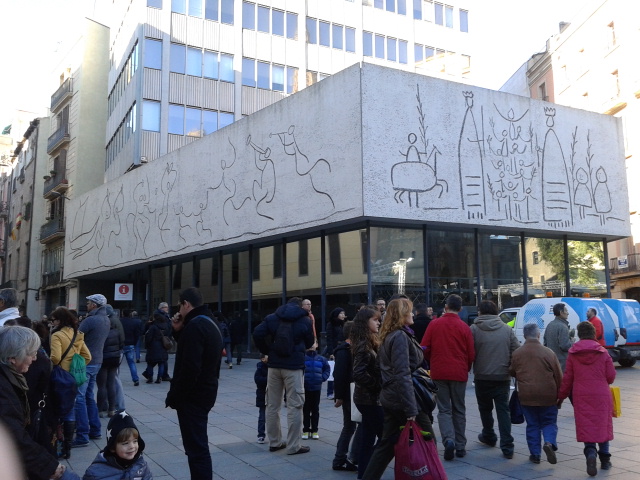
From La Rambla we ventured into the complex system of alleyways that makes up the Gothic Quarter, where a network of cobbled streets connects a series of vibrant squares, each filled with people enjoying al fresco dining and drinking. In the middle of everything are several churches, themselves just as much a hive of activity as the courtyards filled with restaurants. As we wandered around, I noticed the level of detail that has painstakingly gone into every single brick, column and paving stone that make up the city. These subtle touches are easy to miss when caught up in the excitement of the crowds, but take the time to really look around and you’ll realise that there is pattern and detail everywhere, whether it’s the pavements under your feet or the facades on the apartment blocks overlooking the back streets. Turning a corner we found ourselves in a larger, more open square – Plaça de la Seu – where one of the buildings was decorated with a graffiti-style frieze by Picasso. This reminded us that it was already late afternoon and that we were meant to be making our way to the Picasso museum. We checked the map and headed in the direction of the museum, yet again getting waylaid by the pleasure of simply wandering around, popping into little boutiques selling bohemian clothes and admiring the gothic architecture. The shops all stayed open long past 5pm which meant it was easy to lose track of the time, and we eventually realised that it was much too late in the day to visit the Picasso Museum. We stopped for a vino tinto in one of the lively restaurant-filled squares then made our way back to our hotel, passing some of Barcelona’s more interesting local characters, including a couple of distinctly batty old ladies sitting on the street knitting and showcasing a very fashionable but disgruntled cat wearing a multicoloured scarf.
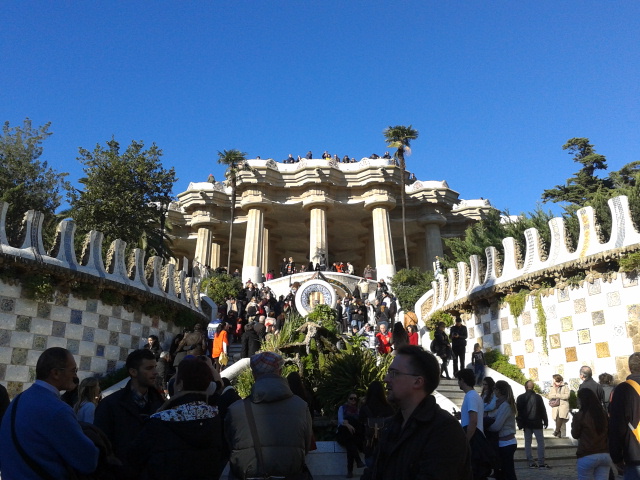
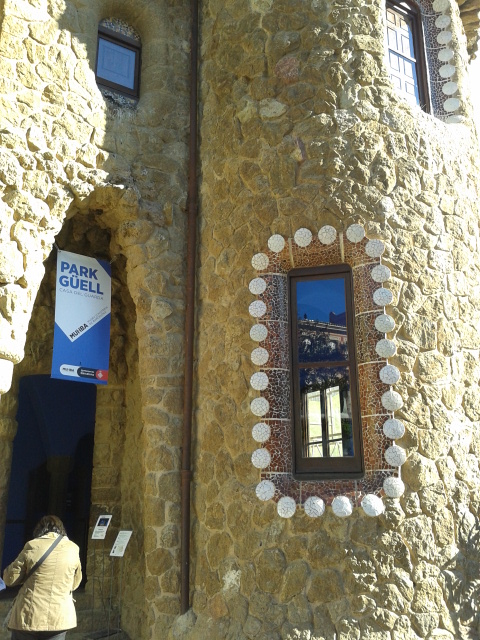
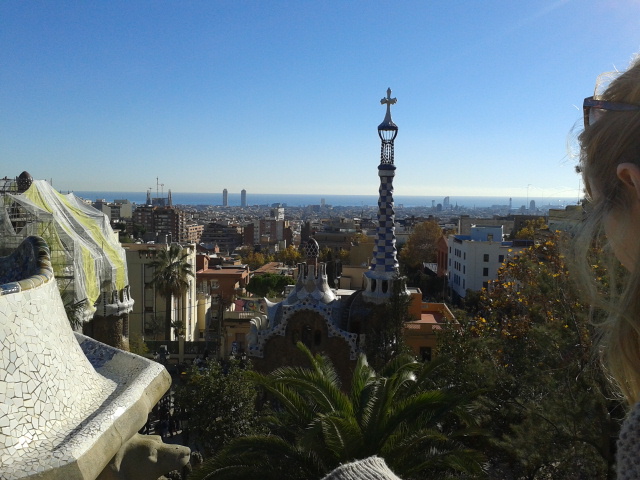
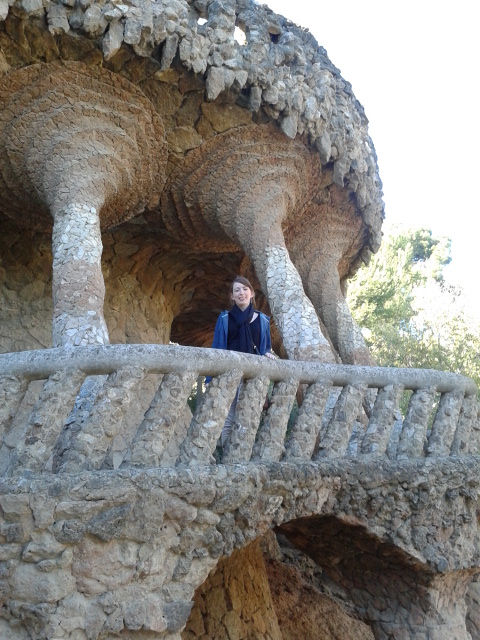
By Sunday we were becoming increasingly conscious of the fact that we had so far failed to successfully visit any of Barcelona’s iconic landmarks and decided to dedicate our last full day in Barcelona to the city’s great master of architecture – Antoni Gaudi. Beginning with Sagrada Familia we were horrified to discover that the queue for entry stretched for several blocks so we made our way up to Park Guell instead. Having climbed the steep streets to the park’s entrance we passed through the gate and came face to face with a sea of tourists, despite it being an extremely cold December day. Yet standing out, above everything else, was the breathtaking colour and beauty of Gaudi’s designs. We climbed the mosaic steps and passed through what had been intended as a covered market, held up by fluted columns of varying shapes and sizes. We sat on the long bench modelled in the shape of a sea serpent, then made our way through the park to its highest point, from where you get spectacular views of the city and the cobalt-blue sea stretching out into the horizon. On this hilltop sits a man-made mound with a stone cross on top. The mound only holds around 10 people but we found ourselves jostling with about 20 other tourists, almost all of whom were attempting to take photos whilst trying not to get shoved off the 10-foot high edifice. Walking back through the park I found it amusing to watch the tourists posing for the camera in all sorts of ridiculous poses, possibly a subconscious reflection of the cartoonish and surreal nature of Gaudi’s designs. Yet despite the bright colours and complex patterning, the constructions still managed to blend in effortlessly with their natural surroundings – testament to Gaudi’s fascination with nature and the inspiration he drew from it.
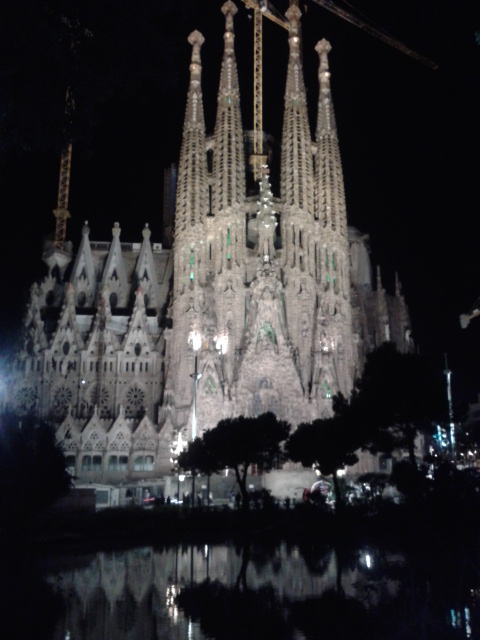
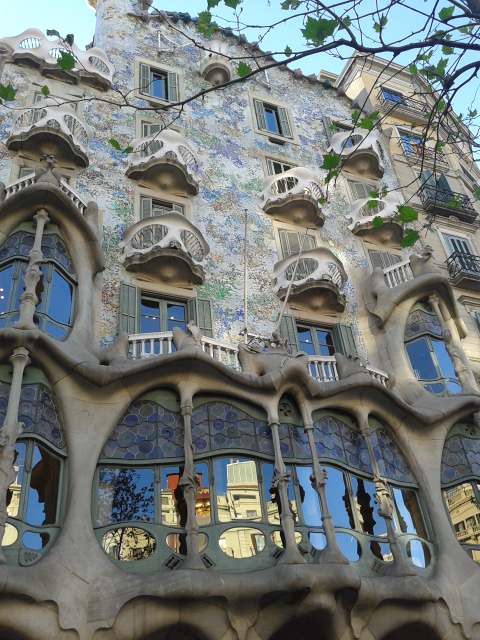
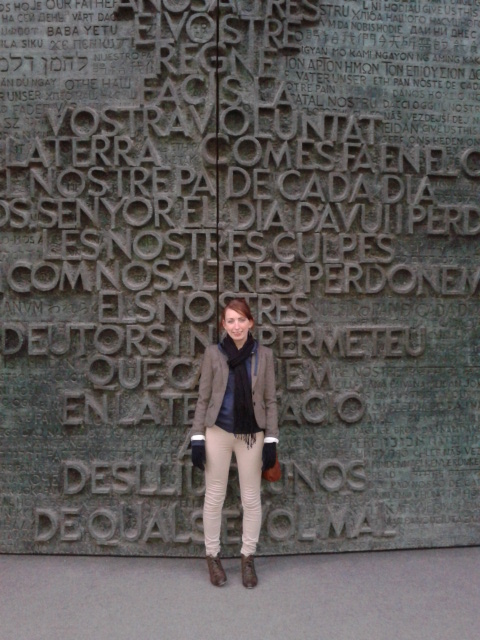
Having had enough of the cold December air we made our way back to the Sagrada Familia (stopping off at the stunning Casa Batllo along the way) where, by this time, the intimidatingly lengthy queue had disappeared completely. It would have been foolhardy of us, though, to make our way through the immense entrance without pausing to stare in awe at the building’s magnificent exterior. Totally wacky and more than a bit bonkers, covered in a muddle of gargoyles, statues depicting various biblical scenes and references to the natural world like birds and trees, this building could not be compared to any other. The overall effect of its detailed layering of patterns and textures was, in my mind, to make the building look like a huge anthill or beehive, no doubt a comparison Gaudi with which Gaudi would be satisfied.
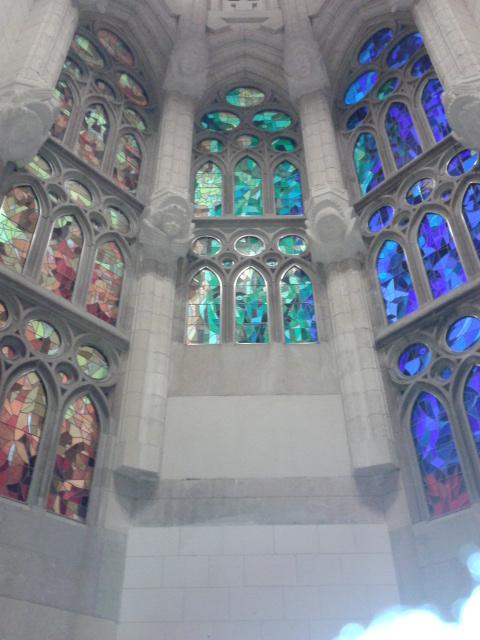
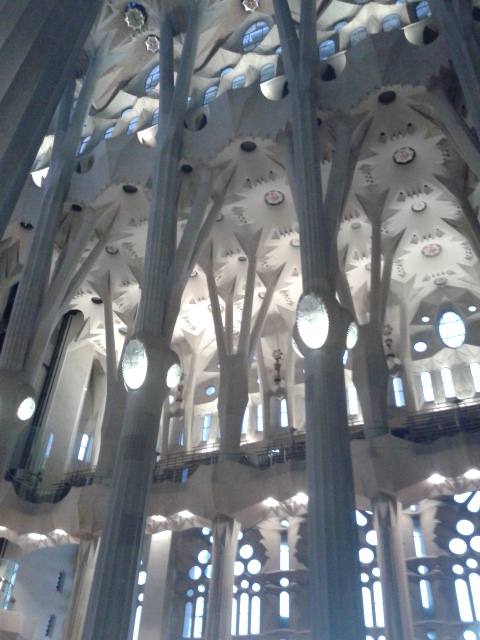
Inside the building the natural theme continues, with different sized columns throughout the main part of the interior designed to make you feel as though you’re in the middle of a forest. However, in contrast to the sensory overload of the building’s facades, the atmosphere is one of serenity and calm. It’s clean but colourful, shiny and spacious and incredibly beautiful. The great vaults are punctured by portholes where light shines through from the heavens, illuminating the cathedral’s vast interior and bouncing off its smooth surfaces. Even as an unfinished piece of work (building work on the Sagrada Familia started in 1882 but isn’t expected to be completed until around 2026!) this building is undoubtedly one of Europe’s finest.
That evening, feeling all Gaudi-ed out, we headed down to the seafront, which we had hardly taken into account since arriving in Barcelona. The city is so dense and tightly compacted, it’s easy to forget that you’re at the seaside, especially when visiting in the winter months. We found some seats in a quirky little bar at the edge of the waterfront and sampled some delicious cocktails that were about 50% alcohol, 40% fresh fruit and 10% mixer. It didn’t take long before we were pleasantly tipsy, and to make the most of our last evening in Barcelona we headed back into the Gothic Quarter to carry out our own mini bar crawl of some of the delightfully tiny bars hidden away down the narrow alleys.
With that, our weekend in Barcelona drew to a close as we merrily took the metro back to our hotel for the last time. We certainly hadn’t seen all the sights that we’d had on our list, but we didn’t regret a minute of our time. Barcelona isn’t a city to be seen. It is a city to be experienced. The city is a living, breathing piece of art and to get lost in its streets and make friends with its people is to discover the real joy that Barcelona has to offer.
 Hidden Corners